
Air Quality, Light & Independent Living in Saskatoon
Air you can see a number for, light that follows the sun through a dark prairie winter, and quiet technology that helps a parent stay in their own home for longer. Environmental and awareness technology — not medical equipment, and we’re precise about that difference.
- Designed with the person, not around them
- Runs in the home, not in a cloud
- Locally owned, Saskatoon
What is a wellness-focused smart home?
It’s a home that measures and manages the things that make it comfortable to live in: the air (carbon dioxide, humidity, fine particles), the light (bright mornings, warm evenings) and, for families, gentle awareness that helps someone live independently — set up with that person’s agreement.
People who call us about “wellness” usually want one of three concrete things. They’re worth separating, because the answers are different.
- AirCO₂, humidity and fine-particle readings room by room, and ventilation that responds to them.
- LightScenes that follow sunrise and sunset through months of short days.
- IndependenceNight-path lighting, door and leak awareness, and a simple check-in for family.
- Private by designReadings and automations run on hardware you own. No cameras in private spaces, ever.
You can’t improve air you’ve never measured
- The number, not a guess. Sensors report CO₂, humidity and fine particles per room, over time, so a stuffy bedroom or a dry January becomes something you can see.
- Ventilation that responds. Where you have an HRV or ventilation fan, we trigger it from the readings instead of a fixed timer. The mechanical side stays with your HVAC contractor; we do the controls.
- Humidity, managed. Static, cracking trim and wet window sills are the everyday signs. Humidity sensing lets the house adjust.
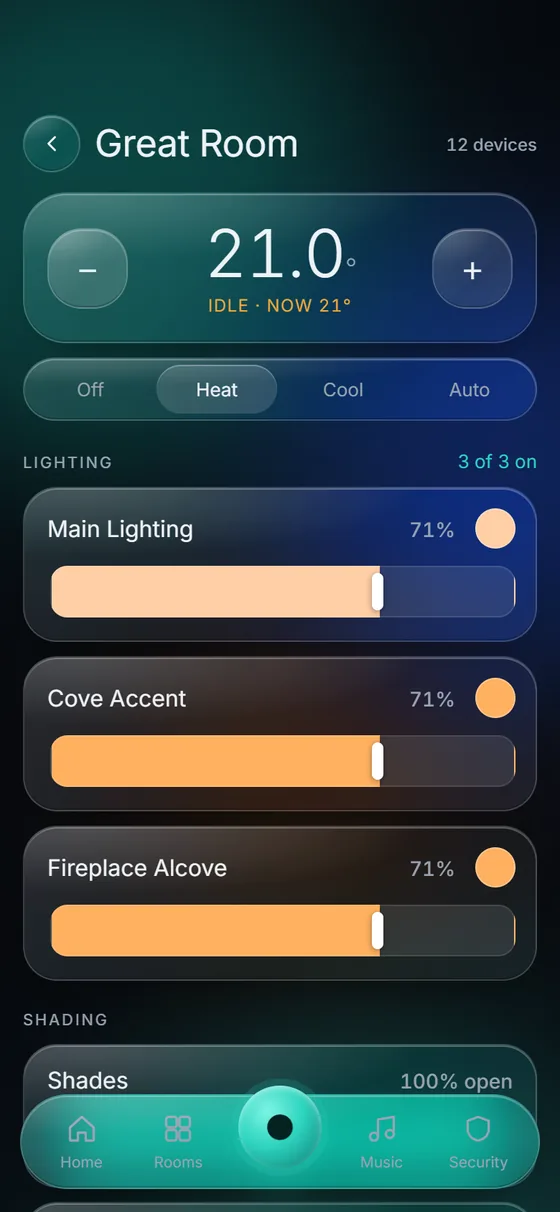
- Air beside the temperature. We’re bringing air quality into each room’s screen in KeenAi One, right next to its climate and lights.
A sealed prairie house has its own air story
Six months shut
Homes here are built tight and stay closed all winter. CO₂ climbing in a closed bedroom overnight is ordinary — and invisible without a sensor.
Very dry winters
A humidity reading turns static shocks and gapping hardwood from a mystery into a number you can act on.
Wildfire smoke
On smoky weeks, an indoor particle reading tells you whether closing up and filtering is working, instead of guessing from the sky.
Short days
Around the solstice Saskatoon gets about seven and a half hours of daylight, with the sun down before five.
Light that follows the day, all winter
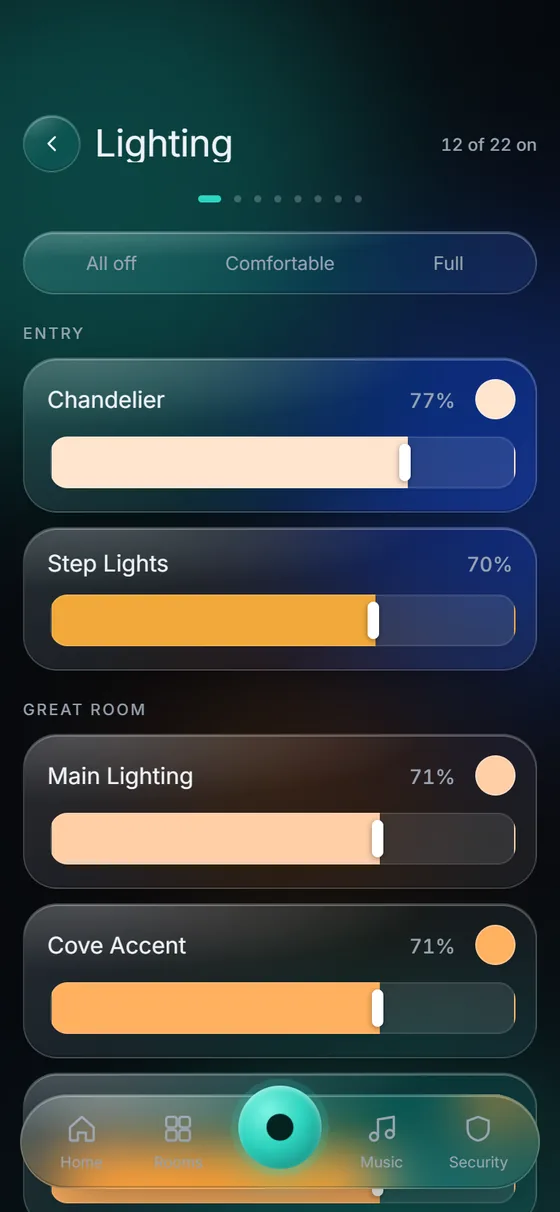
- Bright, cool mornings. The kitchen and bathroom come up crisp and bright on dark January mornings.
- Warm, low evenings. Lights shift warm and dim as the sun goes — before five in December, after half past nine in June.
- Tunable white where it counts. Fixtures that change colour temperature, set from the same screen as the dimmer.
- Nobody adjusts a schedule. Scenes track sunrise and sunset, not the clock. See lighting & shades for the full picture.
Helping a parent stay at home, without watching them
The worry is usually specific: a dark hallway at night, a basement stair, a stove, whether the day has started normally. Each has a modest answer that doesn’t require watching anybody.
Safe night path
Low lights that come on from bed to bathroom, and the stairs lit before the first step.
Door awareness
A door left open on a cold night, or the front door at 3 a.m. — at whatever level the resident agrees to.
Leak & temperature
A burst pipe or a cold house caught early, with automatic water shut-off.
A simple check-in
Optional activity notifications for family, agreed with the person living there.
Controls that stay simple
Real switches and a clear wall panel. Nobody needs a phone to turn on a light.
Ask in plain words
“Turn on the hallway lights” — for anyone who’d rather say it than tap it.
Everyone in the room
We do the assessment with the person who lives there, not just the family member who called.
Least intrusive first
The smallest change that solves the actual worry.
Show exactly what it does
What is recorded, what isn’t, who can see it, and how to turn any of it off.
Consent, always
They decide what goes in. Consent is a requirement, not a feature.
What this is not
- It isn’t medical equipment, and we make no health claims. We install sensors that measure air and automations that control lights and ventilation. We don’t diagnose, treat or monitor anyone’s health.
- It doesn’t replace a medical alert service. If what you need is monitored fall detection or an emergency pendant, that’s a different, certified product and you should have one. What we install sits alongside it.
- Awareness isn’t surveillance. No cameras in private spaces. The person living in the home is our client too, and can say no to any part of it. If a family wants monitoring the resident hasn’t agreed to, we’re the wrong company.
- A reading is not a cure. If the numbers show a real ventilation problem, the fix is often mechanical — an HRV, a bathroom fan that actually vents, or an HVAC contractor. We’ll tell you when that’s the answer.
Sensor, ventilation and lighting brands we work with
KeenAi One brings these into one app. If you already own one, we’ll usually build around it.
Air & humidity
Room sensors and whole-home air
- Airthings
- Aprilaire
- Honeywell Home
- ecobee
Lighting
Dimming and tunable white
- Lutron Caséta
- Lutron RadioRA 3
- Philips Hue
- IKEA
Leak & temperature
Sensors and shut-off
- Sinopé
- Aqara
- Shelly
Highlighted: KeenAI is a Sinopé Authorized Reseller & Installer. Open standards too: Zigbee, Z-Wave, Matter and Wi-Fi. Other brand names are trademarks of their owners, listed for compatibility; this is not a claim of dealer or partner status.
Measure, review, then automate
Free assessment
We look at the rooms, the ventilation you have and what actually worries you.
Design & quote
The sensors, lighting and automations your home needs, with a fixed quote on the spot.
Install
Clean installs; ventilation wiring by licensed partners where needed.
Review with you
We look at the readings together after a few weeks and tune the automations.
Air quality & independent living: frequently asked questions
Is this medical monitoring?
No. We install environmental sensors and home-automation technology. It doesn’t diagnose, treat or monitor any medical condition, and it complements rather than replaces medical alert services, professional care or advice from a doctor.
What does indoor air-quality monitoring measure?
Typically carbon dioxide, relative humidity and fine particles, per room, over time. That tells you when a closed room is getting stuffy, whether your winter air is as dry as it feels, and what indoor particle levels are doing on a smoky day.
Why does CO₂ build up in bedrooms?
People breathe it out, and a closed bedroom in a tight house has little fresh air coming in. It’s common in homes sealed against a prairie winter. A sensor shows when it happens; ventilation that responds to the reading, or a door left ajar, changes it.
Does it help on wildfire smoke days?
It tells you what indoor particle levels are doing, which is the information you’re otherwise missing. Whether closing up and filtering is working stops being a guess. We’re describing measurement here, not a health outcome.
Can it run my HRV or ventilation automatically?
Often, yes — we can trigger existing ventilation from sensor readings instead of a fixed timer. The controls are ours; the mechanical side, including installing or servicing an HRV, stays with your HVAC contractor.
What humidity should my house be in winter?
It depends on how cold it is outside: the colder it gets, the lower indoor humidity has to be to keep frost and condensation off the windows. Humidity sensing lets the house adjust. We set the targets with you for your windows and your house.
Does lighting really change how a house feels in winter?
Most people notice it, and at this latitude there’s a lot of dark to work with. Warm evening light and brighter mornings on an automatic schedule make rooms feel better through the season. We’re happy to demonstrate it rather than argue about it.
Will my parent feel watched?
Not if it’s designed properly, and that’s mostly a design question. We do the assessment with the person living there, use the least intrusive option that addresses the concern, put no cameras in private spaces, and show them exactly what is and isn’t recorded.
Does this replace a medical alert pendant?
No. A monitored medical alert service is a certified product with a response centre behind it. What we install — night lighting, door and leak awareness, a check-in — can sit alongside it, never instead of it.
Who can see the readings and alerts?
The people the household chooses. Readings and automations run on hardware in the home, and alerts go to the phones you name. The resident knows who is on that list.
Do I need a subscription?
No. You own the hardware, and seeing conditions in your own house doesn’t require a monthly fee.
How much does it cost?
It depends on the rooms and what you want it to do: a few air sensors and a full independent-living setup are very different jobs. We give you a fixed quote at a free on-site assessment, before any work begins.
Updated October 2026.
Wellness works best with the rest of the house
A house that’s considerate, not one that’s watching
Free on-site assessment in Saskatoon, Warman and Martensville. A fixed quote on the spot, and an honest line about what technology can and can’t do.
Elsewhere in Saskatchewan? Get a free quote without a visit.